Friday, 5 September 2008

Skywatch Friday: cloudy sky

Last weekend, as we made our way to Elafonisi, probably about the best beach in Hania, the sky suddenly darkened.

cloudsclouds

Is it going to rain, we wondered. We do actually need it, but not necessarily today.

cloudsclouds

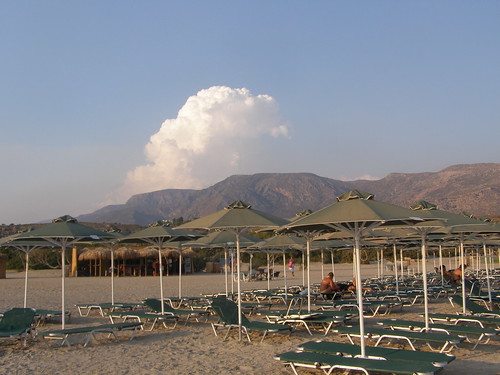
When we finally arrived in Elafonisi, all that remained of the clouds was this big white one.

cloud over elafonisi hania chania
(Elafonisi in the late afternoon)

The rain didn't come to Hania after all; it went elsewhere.

Thursday, 4 September 2008

Stalos beach

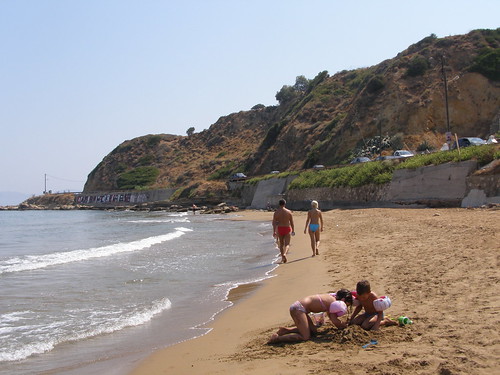
When you look at a photo of a beach that looks like this (blue sea below a blue sky, calm crystal waters, sunny skies, warm weather), the first thing you are probably going to think is "I wish I were there."

stalos beach hania chania

Yes, why not. Now put yourself in the barefoot camerawoman's feet (and bikini), and turn around to see what's on the other side:

stalos road hania chania

A main road, situated on a dangerous bend (this particular point on the road is also called 'the dangerous Stalos bend' by the locals), with a steady stream of traffic all heading to the same or similar places on the western coastal road out of the main town of Hania. There are also pipes for the water supply trailing down the hillside, and a shop that sells fireplaces and brick barbecues, which is sited in the hollow carved out of the hill to make way for commercial activities.

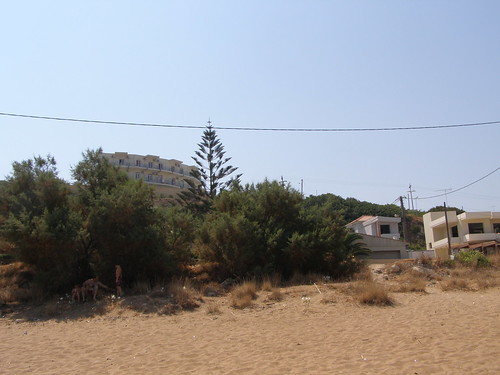
The scenery gets worse:

stalos road hania chania

... a hilltop hotel with a grotesque unseemly design; nothing in its facade attracts clients, except perhaps the 'magnificent view of the beach' (imagine the climb up to it after your swim). It is exposed to the sun all day, hence the garish A/C boxes above each and every single French window. A few hastily constructed unfinished rooms (with an empty open-air restaurant below one) are strewn haphazardly across the face of the hill, a dirty grey garage shed, and a mound of rubbish under the trees.

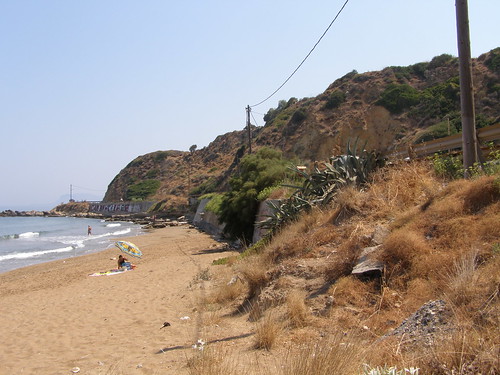
The coastal roads did not even have a name for the beaches that were located on them before the advent of tourism. They were simply known as 'yialo', the seashore; the name of the village located above the beach was used to signify the part of the 'yialo' referred to. They were once considered the most desolate places to live, mainly because the land immediately before the beach was thought of as infertile, the salty soil incapable of nurturing anything edible on it. In fact, most of the uninhabited coast was sectioned off in plots and given by the state as a gift to the Asia Minor refugees who came to live in Greece after being expelled from the former Ottoman Empire (now Turkey). When I first came to Crete nearly two decades ago, I clearly remember sheep grazing on some fields in front of the sea, and there were also two brick-making factories located here. The land has now all been turned into hotels, shops, restaurants and other businesses catering to the tourist trade.
stalos road hania chania

You might wonder why we came out here as a family, when we have the choice of so many other places to go for a swim. It's actually quite close to where we live, and the waters are extremely clear. There are no beach umbrellas on this particular site (although there are a little way towards the left), but that should serve as a warning: the area is known for its dangerous riptides, pulling you back into the sea when there is a strong current, rather than pushing you out to the shore. About forty years ago, seven army cadets drowned here, and countless tourists' bodies have been washed ashore over the years. That's not including the road accidents that have caused fatal injuries. You can see a little white rusty iconostasis with a tiny cross between the tamarisk trees and the flax bushes, which is a sure sign that someone has died on this spot; when we left the beach, I noticed that fresh flowers had been laid in it, as well as on other points on the same side of the road, which means that the deceased's families are maintaining the sites where their loved ones left their last breath.

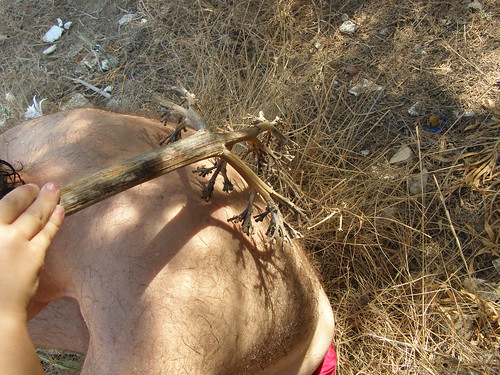
In amongst the horrors of the location, we found that we did enjoy our swim here. The water was cool, fresh and clean. I do recommend you come to Stalos beach too, but just be careful of your steps (and strokes). We also found some dried branches of the flax flower, which make a marvellous back-scratcher...

back scratcher flower stalos hania chania

as well as reindeer horns!
reindeer flower stalos hania chania

Wednesday, 3 September 2008

ABC Wednesday - Colours: G for green

It's ABC Wednesday again, and G is for green.

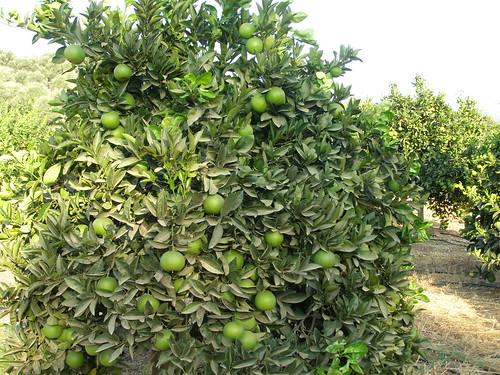
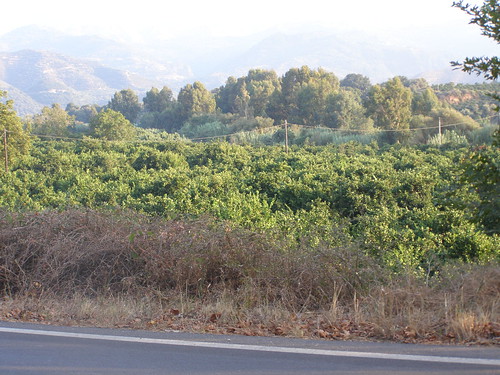
September in the village of Fournes is a time of reckoning: did last season's oranges do well? are the olives ready for oil production? It is also a time of renewal: the rusty orange colours give way to fresh green leafy shades; the new orange and olive crops have started to set in. The new fruit looks so fresh, so young, like a newborn baby, maturing slowly with the help of the elements. Valencia oranges only take on their familiar colour after Christmas, and aren't edible until well after Easter.

orange tree fournes hania chania

The greenery is accentuated by the green shutters, doors and windows of the white houses, the shady vine leaves in the front yard, the potted plants in the old aquamarine painted containers that have been given a new lease of life as plant holders. The river gleams of green slime growing on its surface beneath its more stagnant parts, surrounded by lush foliage.

green shutter fournes hania chania house fournes hania chania green gate fournes hania chania
crates fournes hania chania pot plants fournes hania chania vine fournes hania chania
keritis fournes hania chania olive tree fournes hania chania keritis fournes hania chania

Fournes
is an evergreen village; most trees never lose their green colour all year round. Deciduous trees are difficult to glimpse, as they are hidden from view, making one believe that spring turns into summer, and summer turns into spring, while winter makes a rare appearance. As you drive along the main road, a sea of green starts to swallow you into its girth, with a wide range of hues according to the species of tree. The silvery teal of the olive tree contrasts starkly against the emerald green of the orange trees.

sea of green fournes hania chania

Summer can be a long hot period of seemingly little action in the field. In a few weeks from now, the olive production will start, bringing on the sounds of the people and the machines involved in this activity.

(This is the second in a monthly series of colour and texture studies based on the village of Fournes, an orange and olive producing area in Hania. The idea is based on an inspiration from the work by
Calliope in her Spectral Studies series.).

©All Rights Reserved/Organically cooked. No part of this blog may be reproduced and/or copied by any means without prior consent from Maria Verivaki.

Tuesday, 2 September 2008

Beach party

Kalamaki Beach has always held good memories for me. When I was eight, my family came to Greece on holiday. We stayed with our grandmother close to Kalamaki Beach, which was my first acquaintance with the area.

kalamaki 1974

I then saw it again in 1991, when I returned on what I thought was going to be another short holiday to Greece. At the time, I wouldn't have believed anyone if they told me that, in less than a decade, I would end up living 3 kilometres away from this beach.

CIMG4482

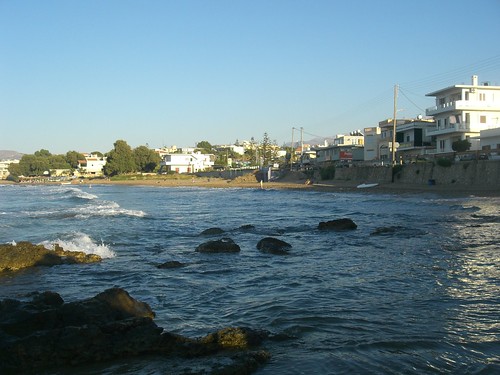
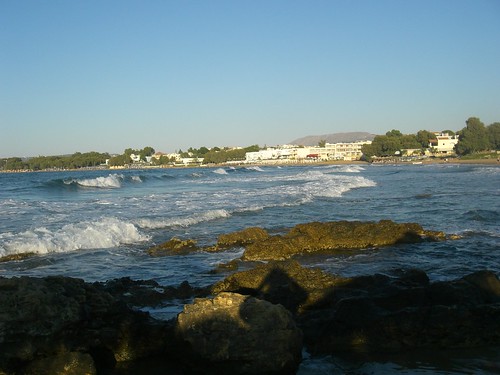
After 34 years, the area has changed drastically. The traffic that plies the road must have increased 1000-fold. The mountains can hardly be seen for the apartment blocks - everyone wants to live by the sea. The number of trees has been increased, while the whole coast has seen an accelerated rate of development in the tourism sector. The large white hotel complex was opened up only two years ago. The breakwater barrier and the electricity post above it are the only two things that seem to have remained constant.

kalamaki beach 20008
(You can read the full version of the story of my 1974 trip at Organically Cooked)

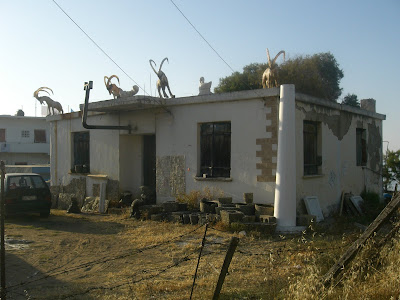
George's parents came to Crete as children, refugees from the Smyrna crisis of 1922. He was born in Hania. Apart from a short spell in the inland village of Manoliopoulo, George has lived all his life by the sea. In the late 1940s, he came to live at Kalamaki Beach, on a plot of land donated by the government to his family (as was the case with most refugees from the Smyrna crisis). At the time, because the land next to the sea was considered infertile, it was also considered useless: sandy soil where nothing could be grown, no orange or olive trees to cultivate, not even a tree for shade. The trees in the photos were planted after the house was built. The land is now worth at least a million euro per 500 square metres. George eventually moved to Thessaloniki, where he married and had children. After his marriage broke up, he moved to Tampa, Florida, where he spent 24 years making swimming pools and other fibreglass models (like the ones he has on the roof of his house), before coming back to Crete to live with his mother (she is now 105 years old).


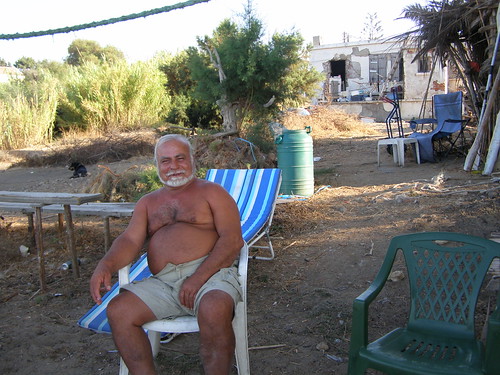
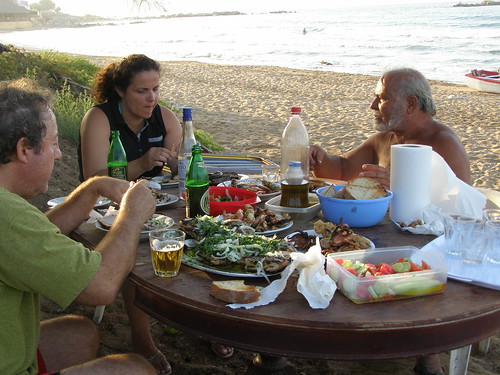
I first met George (his house is right behind the tallest tree in the first colour photo, but it is not visible) when he noticed me coming to the beach every day with my children (close to where they took their swimming lessons). I was using a hidden path, partly obscured by tall canes, which I discovered when I saw some tourists using it; there are small pension-type hotels dotted all around the area. He noticed that while the children played in the water and made sandcastles, I sat on a deck chair reading a book, which George immediately took as a sure sign that something was wrong in my life (?$*!#(%?). His house was directly behind the part of the beach that I particularly liked - save the barking dogs he kept on his property. Over the summer, I met an interesting person, the children were served refreshments after their swim, and George's dogs stopped barking when they saw us, a sign that we were now familiar to them. George loves to couple good company with good food, and his yard, looking more like a furniture scrapyard than a private home, is always ready to hold a BBQ without too much notice. Today, he's staging a small beach party for us to mark the end of summer.

george

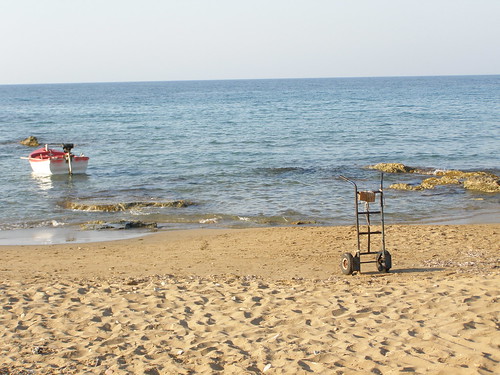
When weather and time permit, he takes his boat (he made it himself) out into the sea for a little cruise, and sometimes goes fishing. He only does this with company, otherwise, he says, it's boring for him. He likes to be a tour guide to the friends he has made along the way at Kalamaki Beach.

boat kalamaki hania chania

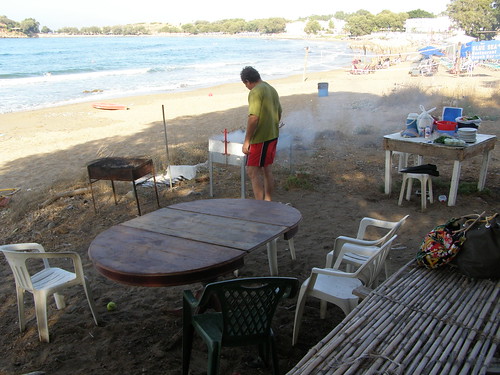
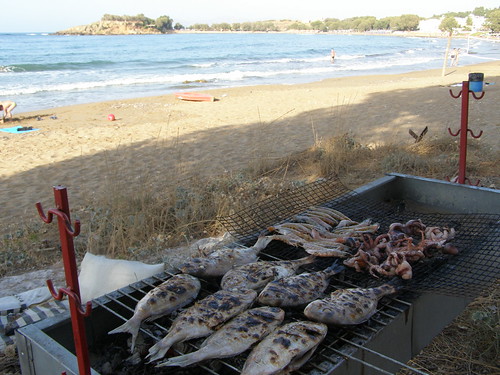
The master chef began working under the shade of a tamarisk tree, hidden from the view of the deck-chaired beach bar customers behind the net.

bbq at kalamaki beach hania chania

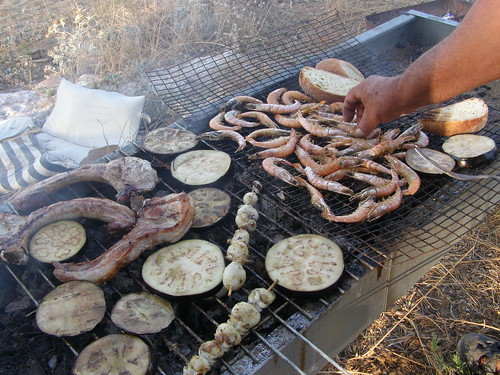
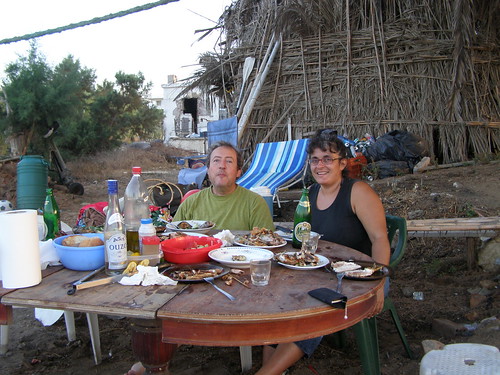
We ate a bit of this...

bbq kalamaki hania chania

... and a bit of that.

bbq kalamaki hania chania

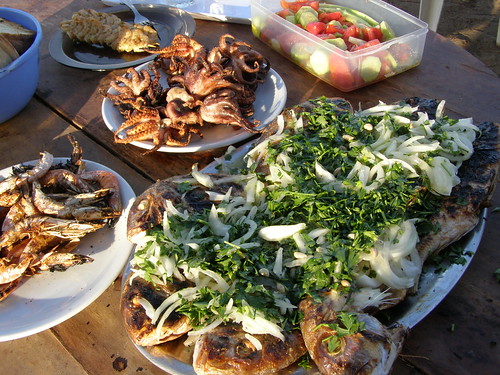
The variety of dishes was really quite amazing.

beach bbq

A traditional dressing for grilled fish was used: finely chopped parsley and thinly sliced onions, piled on the fish, over which a lemon-olive oil-salt dressing was poured.

bbq fish

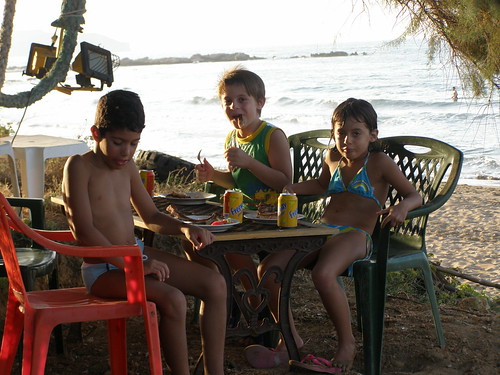
The adults enjoyed themselves...

kalamaki beach hania chania

... and so did the children...

kalamaki hania chania

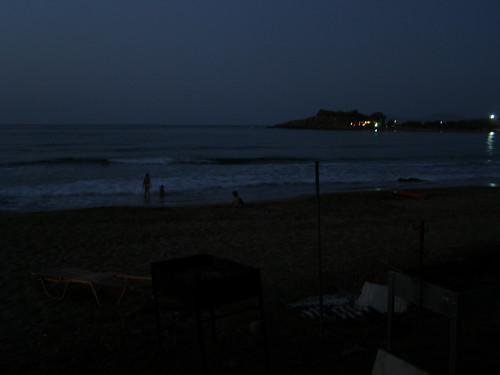
... who even had a midnight swim!
midnight swim kalamaki hania chania

When Greeks come back from their vacation and go back to work, they wish each other a happy winter.

kalamaki hania chania

Καλό χειμώνα!
(kalo heemona)


©All Rights Reserved/Organically cooked. No part of this blog may be reproduced and/or copied by any means without prior consent from Maria Verivaki.

Monday, 1 September 2008

Sister cities

CDP Sister Cities Theme Day

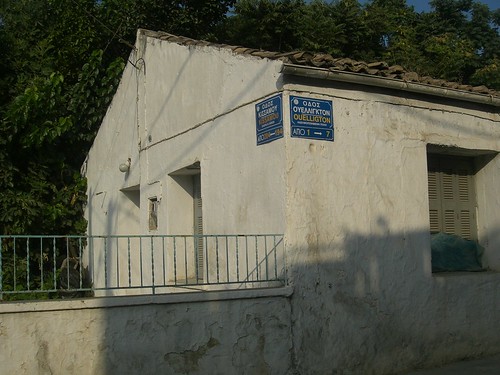
Wellington St, Hania, Crete, Greece

wellington st hania chania

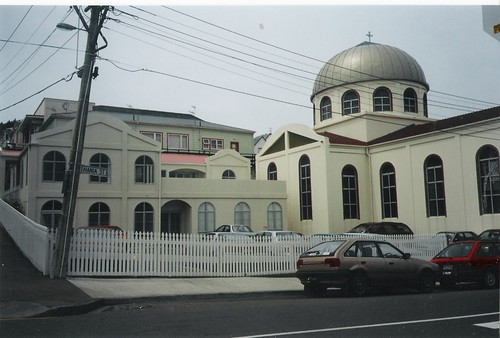
Hania St, Mt Victoria, Wellington, New Zealand

hania st wellington new zealand

Hania and Wellington became sister cities in 1984. They are linked in contemporary history by the assistance provided by the people of Crete to New Zealand soldiers during the second world war while they were fighting with the allies against the enemy.

The renaming of the former Lloyd St to Hania St was chosen due to the location of the Greek Orthodox Church of Wellington, which serves the Greek community in the area. The church is located in the suburb of Mt Victoria which was where the first Greek migrants to Wellington chose to make their home. I lived in the neighbourhood of the church for nearly two decades. I took this photo nearly five years ago when I was last in New Zealand.

The choice of the street in Hania which was eventually renamed Wellington St was more random than that. It is a long narrow built-up road that starts on the outskirts of the town and ends by the sea at Nea Hora beach. It is a mish-mash of light industry, shops, a few old houses and many apartment blocks. The Greek explanation on the sign translates as 'sister city'. It isn't the most picturesque street in the town, but at least the sign has been updated to explain its name, despite the spelling mistake in the Latin alphabet transliteration - the Greek letters 'OUE' make the English sound, 'WE' as in 'well'. Oh ouell...

Click here to view thumbnails for all participants