It's
ABC Wednesday and D is for
dakos.
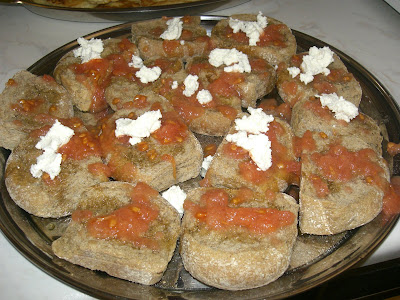 Dakos
Dakos is a favorite dish in the town of Hania. It represents a sunny summer and good health, as it is made with very nutritious and fresh ingredients:
hard dry brown rusks,
mizithra curd cheese, fresh
tomatos and locally produced
Cretan olive oil.
The twice-baked
rusk is a kind of brown bread that has all its moisture removed. It is eaten as is, but some people soak it if they haven't got good teeth, or they find it unpalatable to eat in such a
dry hard form; we LOVE
dakos DRY and CRUNCHY. It's available in supermarkets and bakeries all over the island.
Soft white
mizithra is a local variety of curd cheese found all over the island of Crete.
Mizithra doesn't travel well, which is why it isn't exported, although it does make it up to Athens, for ex-patriate Cretans to enjoy in the big smoke. It is used in all forms of cooking: as
a sweet or
savoury pie filling, as stuffing in meat, as a side
dish, added to salads, as a spread, you name it; it's use is ubiquitous.
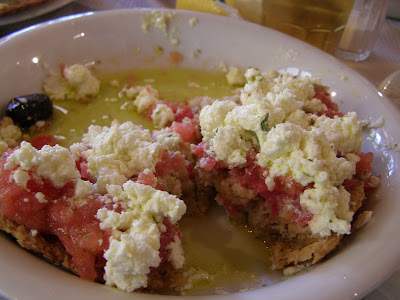
If you ever come to Hania, you will see
dakos on all the menus of all the tavernas, cafes and restaurants of the town; it is never omitted, and no wonder: after having your first
dakos, you will never forget it. It will probably be your meal of choice for breakfast, lunch and dinner, throughout your stay in my sunny town. Don't forget to buy a pot of fresh
mizithra just before you leave the island with your chartered flight, and pack it in your suitcase, so you can recreate this
dish in your own home.
When I took my family on holiday to London (twice), we carried with us a can of olive oil which was produced in our village and a bag of those traditional rusks, as well as a pot of soft
mizithra cheese in our baggage. Every day, we prepared some
dakos and took it with us to all the free museums where we picnicked: St James Park, the picnic room of the
Duxford Air Museum gardens, and the panoramic Parliament Hill, as well as many other best-of-British tourist spots were blessed with the presence of this most Mediterranean
delight tucked away in our backpacks. There was only one problem: the tomatoes that we bought in London were always unripe and too hard to puree over the rusk. No surprise, since they were
imported products. One bag we bought came all the way from the Canary Islands...
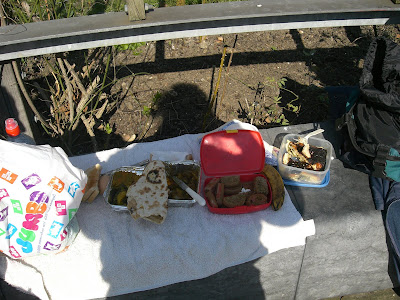 Dakos
Dakos is extremely easy to make. It is extremely easy to eat, having that finger-licking good quality to it; you wouldn't want to waste all that aromatic olive oil, soft white cheese and juicy tomato on a towel. I have been making
dakos for my children ever since they were old enough to crunch on a rusk, as a morning snack, a quick lunchtime meal, a
dinner snack and even for morning interval at school. You can literally eat this any time of the
day all year round - as long as you have good quality tomatoes.
Visit Organically Cooked for more Cretan recipes.